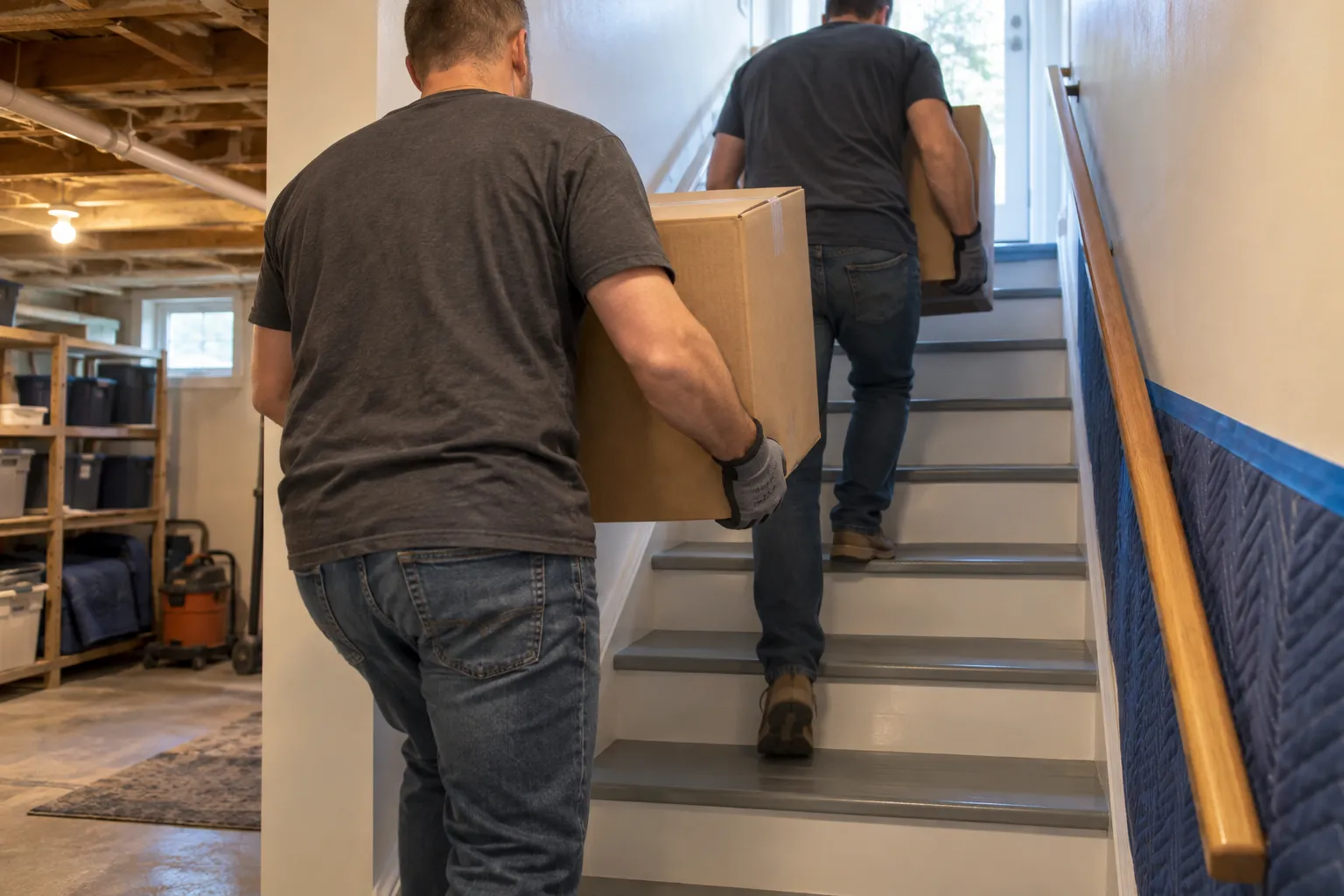
A simple measurement guide for stairs, doors, turns, headroom, and the final carry to the loading point.
Measure the narrowest points
Record the clear width of the basement door, stairway, landing, hallway, and exterior door. Measure between fixed surfaces, not from trim edge to trim edge if handles or railings reduce the usable opening.
Sketch the turns
A large item can fit through a doorway and still fail at a landing. Note each ninety-degree turn, ceiling slope, handrail, pipe, and low beam. Photos taken from both directions make the route easier to assess.
Describe the item honestly
Give the widest, tallest, and deepest dimensions you can measure. Say whether doors, legs, drawers, or shelves can be removed. Do not disassemble heavy or pressurized equipment without the right knowledge.
Finish at the truck path
The route continues beyond the basement door. Include yard gates, steps, sloped drives, snow or ice exposure, apartment corridors, and the distance to a legal loading space.
Access measurement card
| Check | Record |
|---|---|
| Narrowest opening | Clear width and height |
| Tightest turn | Landing depth and obstructions |
| Stairs | Width, step count, railings, headroom |
| Outdoor carry | Steps, gate, surface, approximate distance |
| Bulky item | Width, depth, height, removable parts |