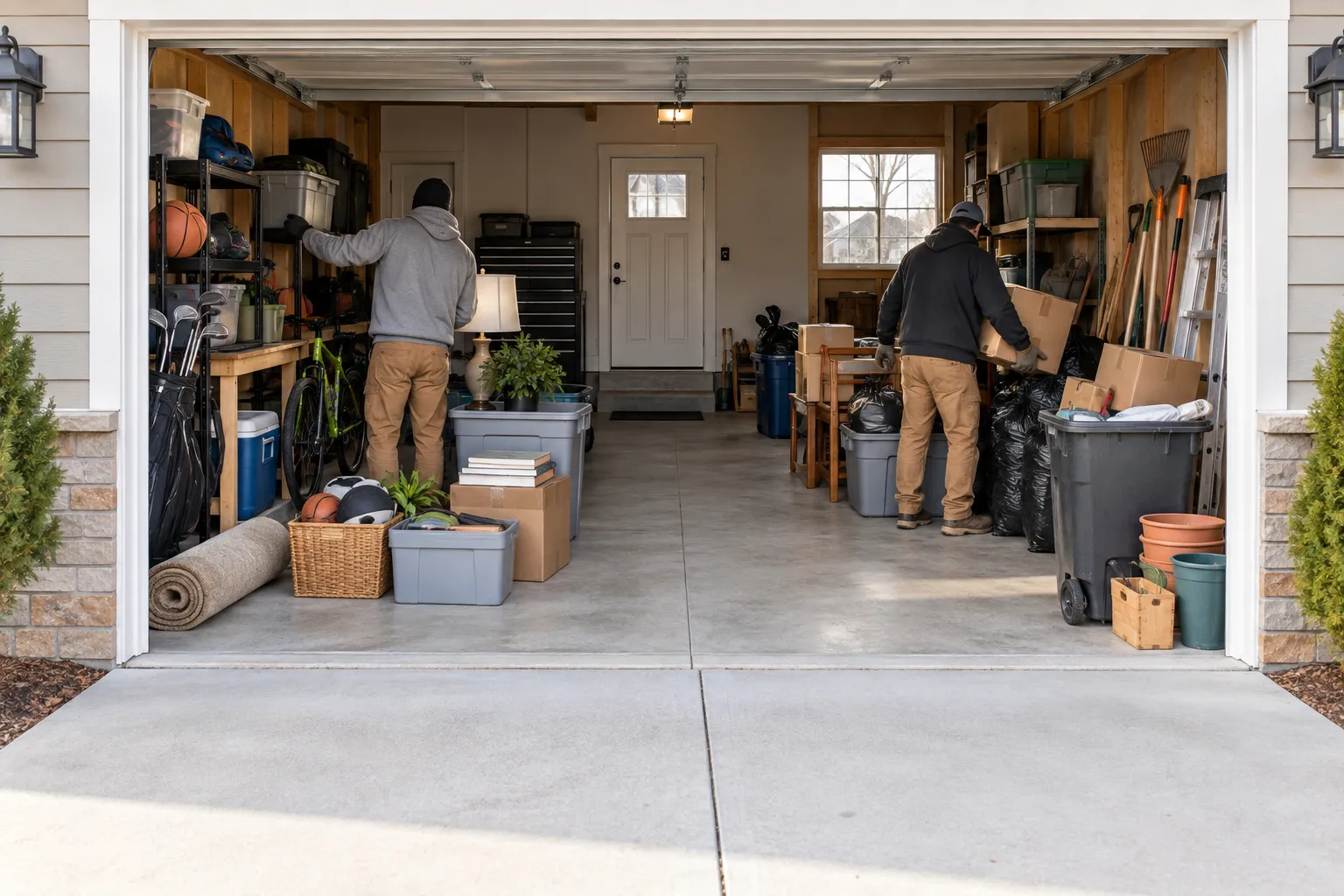
How to separate ordinary garage contents from paint, fuel, batteries, cylinders, and other special-handling materials.
Do not make one mixed pile
Garage contents often include ordinary household goods beside materials that cannot travel in a general junk load. Keep unknown containers where they are, read intact labels without opening anything, and tell the provider what is present.
Separate county-program materials
Cuyahoga County’s Solid Waste District lists oil-based paint, solvents, automotive fluids, fuels, pesticides, pool chemicals, and certain cleaners among household hazardous wastes. Its current household hazardous-waste page also explains items the program does not accept, so check the current guidance before a drop-off.
Keep cylinders and batteries visible
Propane tanks, fire extinguishers, helium or oxygen tanks, and batteries have separate routes. Do not bury them in boxes or trash bags. Photograph the item and label so the correct option can be checked.
Make the ordinary load easy to see
Once special-handling items are separated, group furniture, clean empty containers, sports gear, tools, cardboard, and household storage by type. A visible ordinary load is easier to scope.
Garage separation table
| Set aside for current guidance | Often part of an ordinary scope after review |
|---|---|
| Fuel, solvents, oil-based coatings, pesticides | Empty boxes, furniture, sports gear |
| Batteries, cylinders, automotive fluids | Clean household storage and small decor |
| Unknown, leaking, or unlabeled containers | Non-attached shelving and approved tools |