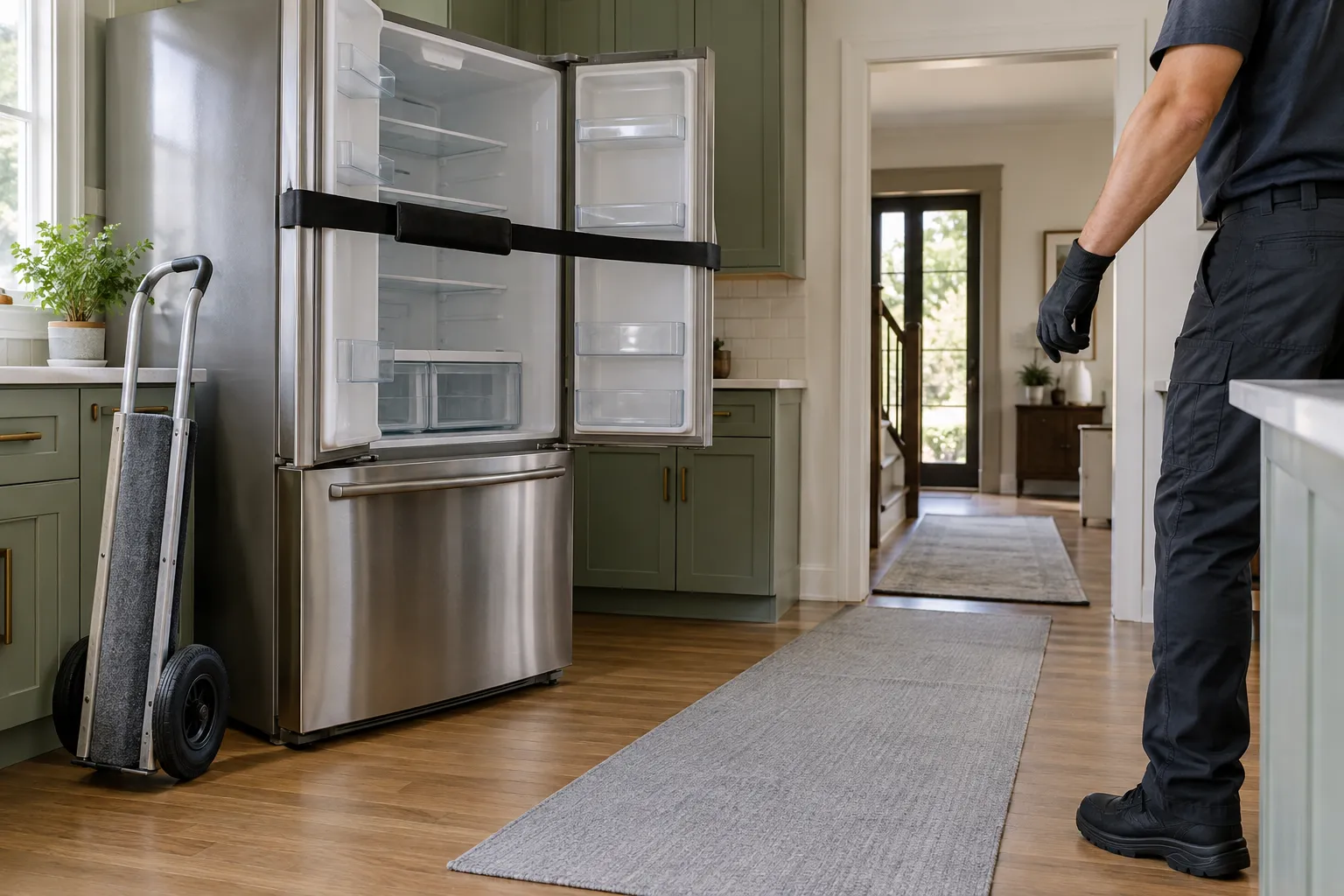
A practical pre-pickup list for food, water, defrosting, doors, access, and refrigerant-aware disposal.
Confirm the pickup requirements first
Ask when the unit must be empty, disconnected, and defrosted. The answer can differ by provider, appliance condition, and building. If a water line, built-in panel, or electrical change is involved, arrange the appropriate qualified help.
Empty and dry the unit
Remove food, shelves that can shift, ice, and loose bins. Follow the manufacturer’s instructions for powering down and defrosting. Place towels where needed and allow the interior to dry so water does not leak across the route.
Clear the full travel path
Measure the appliance and the narrowest opening. Protect floors, remove doors or gates from the route only when the plan calls for it, and confirm elevator or building rules in advance.
Use a disposal chain that handles refrigerant
The U.S. EPA explains that refrigerators, freezers, window air conditioners, and dehumidifiers may contain refrigerants that must be recovered in the disposal process. Review the EPA’s consumer appliance-disposal guidance instead of venting or attempting refrigerant work yourself.
Refrigerator pickup checklist
- Confirm date, preparation rules, and who disconnects the unit
- Remove food, ice, loose shelves, and personal items
- Defrost and dry according to manufacturer instructions
- Measure the unit, doors, turns, stairs, and elevator
- Keep children and pets away from the moving route
- Confirm the provider uses a compliant refrigerant-handling disposal chain